Thursday, January 13, 2011

Sarah Palin gets it wrong on childhood obesity campaign

In this country, nutrition issues often become political ones. Although most people seem to agree that eating healthy foods is generally a good idea, there is a lot of disagreement about what role the government should play in promoting healthier food choices. I discussed one example of this kind of controversy a while back, in a post about regulating Happy Meal toys. Another example can be found in Sarah Palin's remarks about Michelle Obama's anti-childhood obesity campaign, "Let's Move."
Back in November, Palin made the following comments on Laura Ingraham's radio show, attacking Michelle Obama's efforts to reduce childhood obesity:

"Take her anti-obesity thing that she is on. She is on this kick, right. What she is telling us is she cannot trust parents to make decisions for their own children, for their own families in what we should eat. And I know I'm going to be again criticized for bringing this up, but instead of a government thinking that they need to take over and make decisions for us according to some politician or politician's wife priorities, just leave us alone, get off our back, and allow us as individuals to exercise our own God-given rights to make our own decisions and then our country gets back on the right track."

The first time I heard this, it really ruffled my feathers, but I tried to ignore it because I knew that if I tried to express my disagreement in a counter-argument, I would end up stressing myself out trying to figure out where to even start to address the many flaws in Palin's logic. But, as time went on, I kept hearing about Sarah Palin's opinion about childhood obesity, and finally decided that I couldn't keep quiet anymore. So here I am, frustrated and seething, blogging about it in hopes that someone reads and understands my point of view so I can feel some sense of relief.

There are 2 major problems with Palin's argument. First, and most important, the assertion that the government shouldn't try to improve children's diets because parents should decide what kids eat is utterly ridiculous and makes no sense. Here's why: the government already does make some decisions about what American children eat. The National School Lunch Program (NSLP) provides cash reimbursement and commodity foods to participating public and private schools, with the requirement that those schools offer free and reduced-price lunches to eligible students. The NSLP also develops certain guidelines about what foods can be served to constitute a "reimbursable" lunch. Sarah Palin doesn't seem to be suggesting that we do away with the NSLP (I'd love to see her try), which implies that she accepts this level of interference from the government in children's diets. However, what she does have a problem with is any effort to improve the standards by which the NSLP and other nutrition programs function. In other words, the government can decide what kids eat at school, as long as it doesn't make them eat anything healthy. If Sarah Palin wants to take a stand against government involvement in childhood nutrition, then she should call for the abolishment of the NSLP altogether, not oppose changes in the program that will ultimately benefit the health of American children.

The fact that the government has an established role in influencing what kids eat renders Palin's points moot. But for argument's sake, let's pretend that the NSLP did not exist and all kids had to bring lunch to school and eat only what their parents gave them. This sounds like exactly the kind of scenario that would restore individual freedoms and get the country "back on the right track," in Palin's view. Responsibility for children's food choices would be placed squarely on parents, where it belongs. This brings me to the second problem.

That Sarah Palin thinks that parents should be the only entities entrusted with ensuring that children grow up nourished and healthy is strong evidence of her detachment from large groups of Americans and the problems they face. For one thing, many, many parents simply do not have the means to provide their children with the quantity and quality of food they need to thrive. They may care a lot about their kids and know how to make good choices for them, but they may be unable to because they can't afford healthy food or can't access it because of where they live; or more likely, both. Then there are parents who can afford to fill their kitchen cabinets with healthy foods but are truly not educated enough to do so. Either they don't know how important nutrition is for their children's immediate and long-term well-being, or they don't know what constitutes good nutrition.

Finally, there are parents who, regardless of whether or not they have the means and know-how to feed their kids nutritious food, just don't care enough to do it. Let's be honest, anyone can be a parent. You don't need any special characteristics or qualifications, and the sad truth is that not all parents are good parents. Just think about how many parents abuse or neglect their children. They're in the news all the time. And these are the people that Sarah Palin thinks should be given sole responsibility for ensuring that the next generation of Americans grows up to become healthy, contributing members of society. Michelle Obama's "Let's Move" campaign states on its website: "We believe every kid has the right to a healthy childhood." Apparently, Sarah Palin believes that a healthy childhood is not a right, but a privilege reserved for those who have loving parents with ample education and financial resources.

Saturday, January 8, 2011

Follow-up: what to do after the stomach bug

In my post about gastroenteritis, I discussed what to do when you're sick and how to prevent spreading your germs, but I neglected a very important point: what to do after you've recovered. To many, the notion that there is anything at all to do besides go back to normal living is probably foreign. What I'm talking about is probiotics.

I am not one to promote dietary supplements willy nilly. For the most part, I think people who do have an agenda and are usually out to profit from others' naive trust and willingness to pay for products that some self-professed "expert" recommends. As the title of my blog suggests, I only ever recommend supplements that have substantial scientific evidence supporting their efficacy. I also don't sell any such supplements or receive any funds whatsoever (unfortunately) from anyone who does.

Now that I've gotten that disclosure out of the way, here's the point I'm getting to: after a bout of diarrhea, whether it is from food poisoning, a virus, a course of antibiotics, or even radiation therapy, the "good" bacteria in your gut are lost along with any pathogens. It is important to replace these beneficial microbes in order to maintain a healthy gut immune system. Doing so may help you get back to feeling normal more quickly.

The following are examples of possible beneficial effects of probiotic supplements, as suggested by research studies:

- decrease the incidence, severity, or duration of infectious diarrhea in children
- prevent or treat diarrhea caused by E.coli, Shigella, and Salmonella (main causes of travelers' diarrhea)
- reduce risk of contracting rotavirus infection in children
- prevent and treat radiation-induced diarrhea in cancer patients
- protect against C.diff-associated diarrhea
- improve symptoms of irritable bowel syndrome; specifically, bloating, abdominal pain, and flatulence
I take a probiotic supplement daily, in hopes of preventing GI infections in the first place. But whether or not you care enough to add probiotics to your daily regimen, you should most definitely consider them when traveling, taking antibiotics, or recovering from an illness.

Once you've decided to take probiotics, however, you will undoubtedly be overwhelmed with the choices you have. Here are some guidelines for choosing a probiotic supplement*:

- A large selection of probiotics can be found at natural foods stores (e.g. Whole Foods Market or small local stores)
- Choose a product that is in the refrigerated section
- Look for a high number of "organisms" or "CFU" per capsule; I aim for at least 1 billion.
- Look for products that contain multiple strains of Bifidobacterium and Lactobacillus
- The number of organisms or "potency" should be guaranteed through the expiration date rather than "at date of manufacture." You will notice a statement about this on the bottle or package.
*These tips are based on my own opinion, not on systematic research

Reference
Collado MC, Isolauri E, Salminen S, Sanz Y. The impact of probiotic on gut health. Curr Drug Metab. 2009; 10:68-78

Thursday, January 6, 2011

Nuts that taste as good as they are for you!


If you pay any attention at all to health and nutrition research in the news, you've probably heard that nuts are good for you. And this is one bit of information from the mainstream media you can actually trust. Nuts are nutritious; they provide protein, fiber, healthy fats, and vitamins and minerals. People who eat nuts regularly have been found to have lower rates of heart disease, metabolic syndrome, and diabetes. I would call all nuts healthy, but walnuts do have a bit of an edge on other nuts- they are the only ones that contain omega-3 fatty acids.

A lot of people avoid nuts because they are high in calories. I think this is somewhat misguided, and a good example of throwing out the baby with the bath water. It is important not to eat large portions of nuts if you are watching your weight, but it is much better to eat small quantities than to not eat them at all. Observational studies have consistently found that people who eat more nuts actually tend to have lower BMIs. Although paradoxical, this may be partially due to the satiating effects of nuts. In other words, nuts suppress hunger and thus may reduce total calorie intake over the course of a day.

So far, it sounds like nuts would make a perfect, healthful snack. And if nutrition is the only thing that matters, then that would be true. However, most of us think about taste first and nutrition second (even me!). Now, it's not that nuts don't taste good... but let's face it: they don't taste great. Pure, unadulterated nuts are pretty bland. I have long incorporated nuts into my diet, but it has been more out of a sense of obligation or self-righteousness than real desire. This is with the exception of almond butter, of course, which is like sex on a spoon (see my previous ode to AB here).

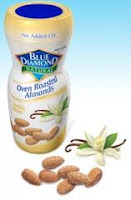
But in the past couple of months, I have noticed a trend in the snack food industry. There seem to be more and more jazzed-up nut products on the shelves. My feelings towards most of them are mixed. My old airport convenience store/gas station standby is Planters honey roasted cashews. These are quite tasty and only have a few extra grams of sugar in each serving. But I've grown bored with them. Blue Diamond has a new line of flavored almonds that sound like dessert: vanilla bean, cinnamon brown sugar, and dark chocolate. I tried all of these, and was a little disappointed. They were good enough, but they still lacked a certain something.

Then, in the span of a few weeks, I came across two products that HAD that something: YumNuts toasted coconut cashews and Sahale Snacks pomegranate vanilla cashews. I found the YumNuts (gotta love that name) cashews at a Whole Foods Market and instantly fell in love. These cashews have a light coating of sweet, subtle, coconut fairy dust. Eating them was a completely new experience and nothing like any other cashews I'd had before. I thought this was as good as nuts could get.

But THEN, I discovered Sahale Snacks' cashews at my local Starbucks. I was on my way out for drinks with some friends and it was a couple of hours after dinner, so I needed a little something in my stomach. My husband and I stopped at Starbucks so he could load up on caffeine and I could grab something- presumably unsatisfying- to eat. I bought these, fully expecting to have the same disappointing experience I had had with the vanilla almonds. Instead, I discovered that a healthy snack could taste as good as candy. I could not stop eating them. The combination of flavors was perfectly delicious and complementary to the cashews. This product does contain 6g of sugar per serving, but this is is still far less than any other snack food that would taste as good.

Both of these brands have a number of other varieties of nuts, but I have not yet tried them. If you are interested, check out their websites to view their other products:

Wednesday, January 5, 2011

In honor of that thing that's going around

It's that time of year. It seems like everyone's sick. I am usually lucky and manage to only get a cold or two. Last year, I think I had the flu. That was pretty miserable, but still not the the worst that could happen. In my mind, the worst has to be the so-called "stomach flu," which really isn't the flu at all (I like saying I had a "stomach thing"; it seems more accurate). I had been lucky enough to avoid this monster for a whole 8.4 years and had begun to think I could continue to avoid it indefinitely. Not so. The thing caught up with me this year, a day after my birthday-- Happy birthday to me!-- and lasted through December 31st-- Happy New Year to me, too!

When the clouds of darkness finally lifted and could muster the energy to have a thought in my brain, I had the same thoughts that I think most people have when they are struck with the stomach thing: Why was I sick? Was it something I ate? A virus? Am I contagious? I think there is a lot of confusion about this, so I'd like to take this opportunity to try to put all of the information I could find about acute gastroenteritis in one place, so that you all can refer to it as needed (hopefully not often!).

Acute gastroenteritis may be caused by a non-influenza virus or, it may be caused by a type of bacteria. Bacterial infection is often the result of contaminated food. In this case, we would call the illness food poisoning. Usually, people assume that a stomach bug is either a virus or food poisoning. What many people don't realize is that food poisoning can also be caused by a virus. In fact, 58% of foodborne illness is caused by a Norovirus (the kind that frequently runs through cruise ships). One in 6 Americans is sickened with foodborne illness each year, so the odds are pretty high that what you assume is a virus you caught from another person may actually be food poisoning.

I have compiled a list of the most common causes of food poisoning and viral gastroenteritis, along with their symptoms, duration, and likely sources. Unfortunately, you will probably never know what caused your illness, but if you have a compulsion to self-diagnose (like I do), have at it!

Food Poisoning Causes

Norovirus (58% of all foodborne illness)
Symptoms: Nausea, vomiting, diarrhea, abdominal pain, malaise, and low grade fever 1-2 days after exposure
Duration: 24-60 hours
Sources: Any food handled by an infected person; touching contaminated surfaces; direct contact with an infected person
Salmonella (11% of all foodborne illness)
Symptoms: Diarrhea, fever, and abdominal cramps 12-72 hours after infection
Duration: 4-7 days
Sources: Beef, poultry, milk, or eggs, but any food may become contaminated. Raw eggs may lurk in homemade Hollandaise sauces, salad dressings, mayonnaise, or cookie dough.

Campylobacter (10% of all foodborne illness)
Symptoms: diarrhea (may be bloody), cramping, abdominal pain, nausea, vomiting and fever 2-5 days after exposure.
Duration: Usually 2-5 days; can take up to 10 days
Sources: Raw or undercooked poultry, unpasteurized milk, or cross-contaminated food

Staphylococcus (9% of all foodborne illness)
Symptoms: Nausea, retching, vomiting, stomach cramps, and diarrhea within 1-6 hours of eating contaminated food
Duration: Typically 1 day; sometimes up to 3 days
Sources: Foods made by hand that require no cooking (ex. sliced meat, puddings, pastries, and sandwiches); high-salt foods are also vulnerable.
**Staph food poisoning is the result of toxins, which cannot be destroyed by heat.

Viral Gastroenteritis Causes
Norovirus (See above)

Rotavirus (most common in infants and young children)
Symptoms: Fever, vomiting, diarrhea, and abdominal pain
Duration: 3-8 days
Treatments
Regardless of whether you have a bacterial or viral infection, the treatment is the same. For the most part, all you can do is wait it out. You may take products like Tums or Pepto Bismol to try to calm the stomach, but avoid antidiarrheal medications (like Immodium). Over-the-counter antiemetics (like Emetrol) are appropriate to control vomiting and prevent excessive fluid loss. In some cases, pediatricians may even prescribe antiemetics in children who are vomiting a lot.

The primary concern whenever you or your child is experiencing diarrhea and/or vomiting is dehydration. It is very important to replace lost fluids. You should start replacing fluids as soon as symptoms start (as tolerated), by sipping small amounts of water or soda frequently. Oral rehydration solutions (such as Pedialyte) are good to have on hand. Be on the lookout for signs of extreme dehydration. These include:

- excessive thirst and dry mouth
- dark urine or little or no urine
- skin that, when pinched, does not quickly return to its original place
- severe weakness, dizziness, or lightheadedness
For more information about when to call a doctor, see this entry at the MayClinic website.
Prevention
Viruses that cause gastroenteritis are very contagious. To prevent spreading them (or contracting them in the first place), practice good handwashing and keep your hands away from your face. Alcohol-based solutions are not enough, as they do not destroy all noroviruses. Soap and water is best! When you are sick, make sure you wash your hands thoroughly after using the bathroom and disinfect all surfaces with a bleach-based solution. Close the lid on the toilet before flushing and disinfect the lid afterwards. You should consider yourself infectious from the moment you feel sick until at least 3 days after you recover. Do not prepare food for anyone during this time.

Sunday, November 7, 2010

Coercion by Big Brother or Big Business. Which do you prefer?


I can't imagine a topic more blog-worthy than this one. If you haven't heard, San Francisco has banned restaurants (like McDonald's) from offering a free toy in a kids' meal unless it meets a set of relatively low nutritional standards. Meals that include toys must contain no more than 600 calories and 35% of calories from fat. Full story on LAtimes.com. A meal with 600 calories may provide anywhere from 25%-60% of a child's total daily calorie needs, depending on age, gender, and activity level. Because the ordinance does not actually require meals with toys to contain any beneficial nutrients such as vitamins, minerals, or fiber, I would hardly consider it to be draconian.

Nevertheless, many object to the new regulation on the grounds that government is once again reaching into private lives and meddling where it shouldn't. It is an understandable objection, but on this issue, I side with the San Francisco government. In a column published today, physician and preventive medicine researcher David Katz does a great job of presenting an argument for regulating toys in kids' meals.

When I first read about the move, my first thought was not that the government was manipulating consumers by regulating businesses, but that it was preventing the manipulation of consumers by businesses. Dr. Katz's column expresses this point better than I could:

"Let's assume that you see the removal of the toy from the Happy Meal as a case of Big Brother telling you what to do. How, then, did you view the placement of the toy in the Happy Meal in the first place?

McDonald's did not consult you to find out if you wanted a toy encouraging your child to prefer a meal of lamentable nutritional quality. They did not consult any parent. They may have done consumer testing showing that kids- and thus their parents- are apt to choose such meals, but that's to find out what's best for them, not for you."

He also makes the important point that the government must be accountable to voters, whereas McDonald's is only accountable to its shareholders. The implication here, as I interpret it, is that the decisions made by the government in this instance are much likelier to be in our best interests than those made by McDonald's.

Finally, as if reading my mind, he says, "We are all prone, whether or not we care to admit it, to manipulation by multinational corporations with fortunes to spend and the best thinnking Madison Avenue can provide. Thinking designed to figure out what it takes to get us to buy what they're selling. Being manipulated into a lunch choice my McDonald's and Dreamworks [which supplies many of the toys] is not exactly the epitome of personal liberty."

I think this last point, the one that I mentioned at the beginning of this post, is perhaps more important. If people were as vigilant of manipulation by business as they are of manipulation by government, maybe they would view this issue, and others like it, differently.

Monday, October 25, 2010

Alcohol: stealth diet saboteur


I can't tell you how many times someone has told me "I do everything right but still don't lose weight." When I hear it, I am sympathetic, yet skeptical. Why? Because weight loss is a simple matter of mathematics. Body cells require a certain amount of energy (i.e. calories) to maintain themselves and keep a human being alive. There is certainly variation in the amount of energy individuals need, depending on height, current weight, muscle mass, activity level, and a few other factors, but most people will burn between 1,000 and 3,000 calories per day doing absolutely nothing. This is a wide range, to be sure, but the people on the lower end of the range are almost certainly very small and not in need of weight loss. In general, the more you weigh, the more calories you burn. All of those extra cells require more energy and it also takes more effort to move the extra weight around. Think about walking uphill with an empty backback vs. walking uphill with a 50-lb. weighted backpack. The latter scenario will burn more calories. In the same way, a person who is 50 lbs. overweight will burn more calories during his or her physical activities compared with a normal-weight person.

Now that you understand this, you should also understand why I was skeptical when a 180 lb. man- we'll call him "Mike"-who works out daily told me that he's eating 1200 calories a day and still can't lose weight. This man had to be burning at least 2000 calories daily, so his reported intake and activity just didn't add up. After a little more prodding, I discovered the reason for the discrepancy. Mike went to a local bar for happy hour every night. He swore he ate only shrimp cocktail, a very low-fat and low-calorie food. What he neglected to tell me was that he also consumed 6-10 shots of liquor mixed with various juices. It never occurred to him that the alcohol he drank could be preventing him from losing weight.

If you are not already aware, let me be the one to enlighten you: alcohol has calories! A lot of them! A standard portion of liquor (1 1/2 oz), beer (12 oz) or wine (6oz) will contain between 100 and 150 calories. That's without any mixers. Mixed drinks and sweet liqueurs will have even more. A large pina colada, daquiri or margarita can easily contain over 500 calories. Even if you don't drink every day, like Mike in the example above, one or two nights of weekend drinking can be enough to undo your efforts during the week to eat right and exercise. If you want to know how your alcohol intake may contribute to weight gain over time, I highly recommend checking out this website, which allows you to calculate the alcohol calories you take in on a monthly, and yearly basis. To figure out how many pounds it amounts to, divide the number you get by 3500 (the number of calories in one pound of fat).

You can also calculate your BMR and estimate your energy expenditure here:

Wednesday, September 1, 2010

Cardiovascular benefits of chocolate

If you are either a) really nerdy or b) really bored, you may be interested in this presentation on cocoa and cardiovascular health. I gave the presentation as part of a seminar course I took this summer. I finally figured out how to upload the video, so I thought I'd post it here.